
Hallowed Ground: More Than 100 Years of Creating Opportunity in Motorsports
By Christopher M. Harris, Founder, African American Automotive Association | September 1, 2026
I took two pictures while running errands in Indianapolis that probably wouldn't mean much to most people. I was there for Dystany Spurlock's NASCAR ARCA race. While driving through the city, I happened to pass the Indiana State Fairgrounds. I knew the place's history, so I immediately understood the significance of where I was. For Black racers, this is hallowed ground
In the 1920s, Black drivers weren't allowed to compete in the Indianapolis 500. At the time, the Indy 500 was already the biggest and most prestigious automobile race in America, but like so many other major sports during that era, its biggest stage was effectively whites-only. But there were a group of men who wanted to do something about it.
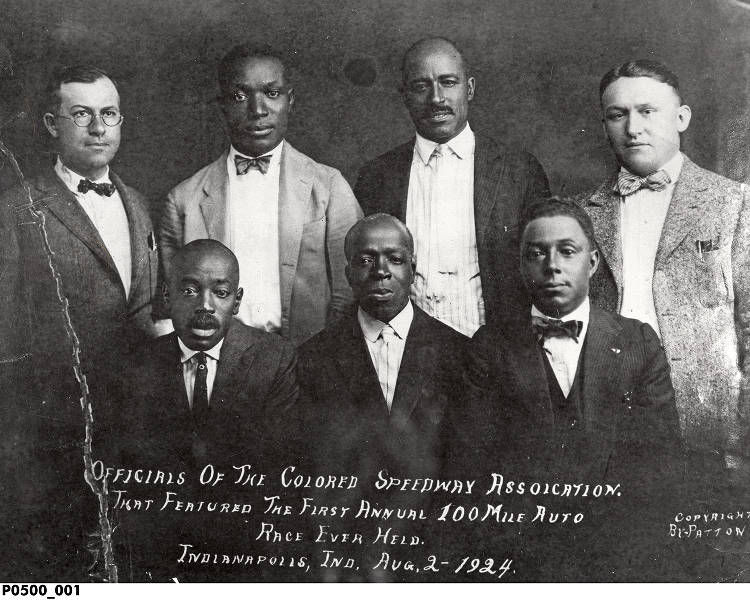
Five Black men and two white men came together to form the Colored Speedway Association (CSA). The CSA organized races around the country and intentionally created a place for Black & Brown drivers to showcase their talent at a time when the mainstream racing industry excluded them. Its biggest event was the Gold and Glory Sweepstakes, held annually at the Indiana State Fairgrounds, and thousands of people came out to watch these drivers compete.
Charlie Wiggins, known as the "Negro Speed King," became one of the biggest stars of that era and a four-time Gold and Glory champion. Wiggins had the talent to compete with anybody. What he didn't have was access to the same opportunities as white drivers. That distinction matters because too much of our history gets framed around whether Black people were capable of doing something, when the real question was whether we would be given the opportunity to do it.
The CSA didn't wait around for the establishment to decide it was finally time to let Black racers in. Five Black men and two white men saw what was happening and came together to create another path. That part of the story is significant. Its proof that people from all backgrounds were willing to stand together and use their access and resources to help create something when the existing system wouldn't.
Leonard W. Miller and Taking the Fight to Indy
Decades later, Leonard W. Miller and his generation continued pushing those boundaries.
Mr. Miller is one of the most important figures in Black motorsports history. Through Vanguard Racing, he wasn't just advocating for Black participation in motorsports; he was building race teams, developing talent, and competing. In 1972, Vanguard became the first Black-owned team to enter a car in the Indianapolis 500.

There is a lot of history packed into that one accomplishment. In the 1920s, Black racers were competing at the Indiana State Fairgrounds because the Indianapolis 500 was closed to them. About 50 years later, a Black-owned team was showing up at Indianapolis Motor Speedway to compete.
Mr. Miller was also one of the founders of the Black American Racers Association (BARA), which worked to support Black drivers, mechanics, owners, and other professionals in motorsports and make sure their contributions were recognized. BARA's work matters to me for reasons that go well beyond history.
The Relationship That Changed My Journey
When I created the African American Racers Association (AARA) in 2020 (now the African American Automotive Association - AAAA) , the work of BARA and Mr. Miller was part of the inspiration behind it. I wasn't trying to recreate BARA. I wanted to take that same determination to create opportunities and apply it to today's automotive and motorsports industries. What I never expected was that Mr. Miller would eventually become part of my own journey.
Since I created AAAA, Mr. Miller and I have developed a relationship that I value tremendously. We talk at least two or three times a month, and he has become a mentor to me. I've been able to call him when I have questions, talk through challenges and listen to the perspective of somebody who was fighting many of these same battles decades before I came along. I also had the privilege of visiting Mr. Miller at his home and spending time with him in person. Kenny Wright and Ronald Hines, two of BARA's founding members, were there as well. Sitting with those men and listening to them talk about what they built, what they went through and what it took to create opportunities for Black people in motorsports put a lot into perspective for me.
There is something Mr. Miller has said to me repeatedly over the years that has stayed with me, and Kenny Wright brought up the same feeling when I visited Mr. Miller's home. Mr. Miller tells me that I'm one of the few Black people currently working in motorsports who regularly calls and talks to him. He has also told me that before I came around, there were times when he felt like everything he and his generation had fought for and built had been in vain. That day, as Kenny talked about much of their work feeling forgotten, he became emotional and was brought to tears. Seeing that hit me differently. These are men who dedicated a significant part of their lives to creating opportunities for Black people in motorsports, yet decades later they were left wondering whether anyone remembered what they had done. I understand that feeling more than I would like to. Our experiences aren't the same, and I would never pretend they are. Mr. Miller and his generation came through this industry in a very different America and faced barriers I will never fully understand. But I do understand the isolation that can come with this work because I feel it myself sometimes. You can be surrounded by people and still feel like very few understand what you're fighting for, why you're fighting for it or the weight that comes with trying to create something bigger than yourself.

That's one of the reasons my relationship with Mr. Miller means so much to me. There is an understanding there that goes beyond motorsports. He reminds me that some of the battles I'm fighting aren't new, and his experiences give me perspective when I'm in the middle of my own. Our conversations have also made me think differently about the responsibility we have to the people who did this work before us. We love celebrating firsts, breaking barriers and making history, but we can't be so focused on the next first that we forget the people whose work helped make those opportunities possible. Mr. Miller shouldn't have to wonder whether what he built mattered, and neither should Kenny Wright, Ronald Hines or the other people who spent decades pushing this industry forward.
There aren't many people who get to build something inspired by a previous generation and then develop a relationship with the people who actually did that work. I don't have to read everything about this history in a book. I can pick up the phone and call Mr. Miller, listen, ask questions and learn directly from someone who lived it. I don't take that for granted, and I understand that access comes with a responsibility. Part of my job is to make sure this history doesn't disappear, that the next generation knows these names and that the work we're doing creates something for the people coming behind us to build on.
Mr. Miller's comments about once feeling like his work was in vain hit me because I understand the isolation behind those words. I understand what it feels like to wonder whether people truly see what you're trying to build. But his journey also reminds me that you don't always get to see the impact of the work while you're doing it. His work wasn't in vain. The fact that BARA inspired me to create AAAA is evidence of that, and I have a responsibility to make sure that connection doesn't end with my generation.
The Responsibility to Keep Building
When I started AAAA, I knew the mission had to extend beyond racing because our history in this industry extends far beyond racing. Black people have been drivers, mechanics, engineers, designers, technicians, executives, marketers, entrepreneurs, creators, and innovators. We've been part of automotive culture since the beginning, even when the industry hasn't always acknowledged it.
I also understood that simply celebrating our history wasn't enough. If the next generation still couldn't figure out how to get into the industry, then we weren't doing enough.
AAAA became about recognizing the people who came before us while creating opportunities for the people coming behind us. That meant education, exposure, access, relationships, and making sure young people could see that there was a place for them throughout the automotive and mobility industry.
That work eventually helped give birth to Foxxtecca.
Today, Foxxtecca Co-Founder Kellie Crawford and I continue to expand that work through education, workforce development, media, technology, events, esports and motorsports. We're putting young people in rooms they otherwise may never enter. We're exposing them to careers they may never have known existed. We're connecting talent with people who can actually create opportunities. And we're building our own platforms instead of waiting for somebody else to decide our work is valuable enough to support.

That's why I see a connection between what we're doing today and what people were doing generations before us. I'm not comparing the circumstances, because the world Mr. Miller navigated and certainly the world Charlie Wiggins navigated were very different from mine. But I recognize the principle behind the work. If the opportunity doesn't exist, create it.
Why I Was in Indianapolis
That brings me back to those two random pictures. Of all the reasons I could have been in Indianapolis that weekend, I was there with Dystany Spurlock, the first Black woman in history to race in NASCAR.

More than 100 years after the Colored Speedway Association was creating opportunities for Black racers in Indianapolis, I was in that same city watching a Black woman continue to break barriers in motorsports. Then, while doing something as ordinary as running errands, I drove past the place where so much of this history happened. That wasn't lost on me.

I thought about Charlie Wiggins racing at the Gold and Glory Sweepstakes. I thought about the men who created the Colored Speedway Association because Black racers deserved a place to compete. I thought about Mr. Miller taking Vanguard Racing to Indianapolis decades later. I thought about BARA and the men I've now had the privilege of sitting with and learning from. I thought about AAAA, Foxxtecca, and everything we've been fighting to build. And then I thought about Dystany and why I was there.
There is a line connecting all of it. Not because one organization simply became the next, but because every generation faced its own version of the same question: What are we going to do about the lack of opportunity?
We've Been Here
We talk a lot about making history in motorsports, but you can't fully appreciate the history being made today without understanding the people who came before us. Black people aren't new to motorsports. We didn't suddenly discover racing because the industry started talking more about diversity. We've been here. We've been racing. We've been building cars. We've been engineering, owning teams, promoting events, creating businesses, innovating and contributing to this industry for more than a century.

And our history shouldn't only be told through the lens of what we weren't allowed to do. There is another side of that history that deserves just as much attention: what we built anyway. The Colored Speedway Association created an opportunity when the establishment wouldn't. Charlie Wiggins became a champion. Leonard W. Miller built Vanguard Racing and took a Black-owned team to the Indianapolis 500. Mr. Miller and others created BARA.
Their work helped inspire me to create the African American Automotive Association. AAAA helped give birth to Foxxtecca. And today we're creating opportunities for another generation while people like Dystany continue breaking barriers on the racetrack.
Sometimes doors opened. Sometimes we had allies who stood beside us. And sometimes, when the establishment wouldn't make room, people came together and created another path.
That's the history I want our young people to know because they're not starting from scratch. They come from something. So when I call the Indiana State Fairgrounds hallowed ground, I'm not being dramatic. I understand what happened there, I understand who came before me, and I understand the responsibility that comes with continuing this work.
That's why two random pictures I took through my car window while running errands in Indianapolis mean so much to me.
There is history all around us. Sometimes you just have to know what you're looking at.


